Greenfield Hyperscale Partners

GHP is an AI-orchestrated industrial company built to meet two needs every industry has: power, and a place for its waste.

We are building a business to manufacture solid oxide fuel cell units for on-site power, including off-grid data centers. A second business will store carbon dioxide permanently underground, and others will turn waste into fuel and useful products. Each is designed to maximize profits while leaving the environment better off.
A lean team supported by an AI operations layer, developing assets designed to be monitored, dispatched and verified by software.

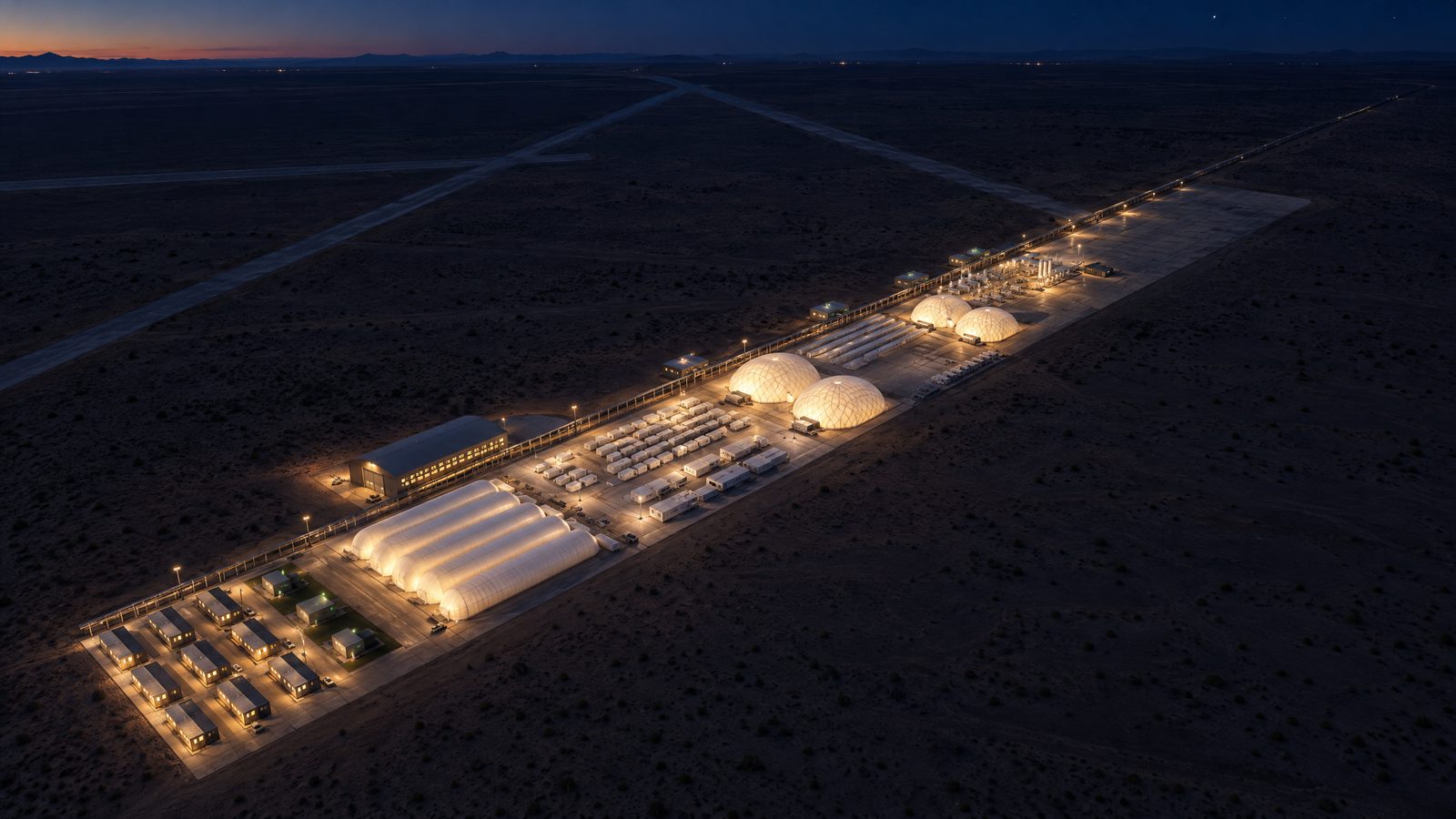
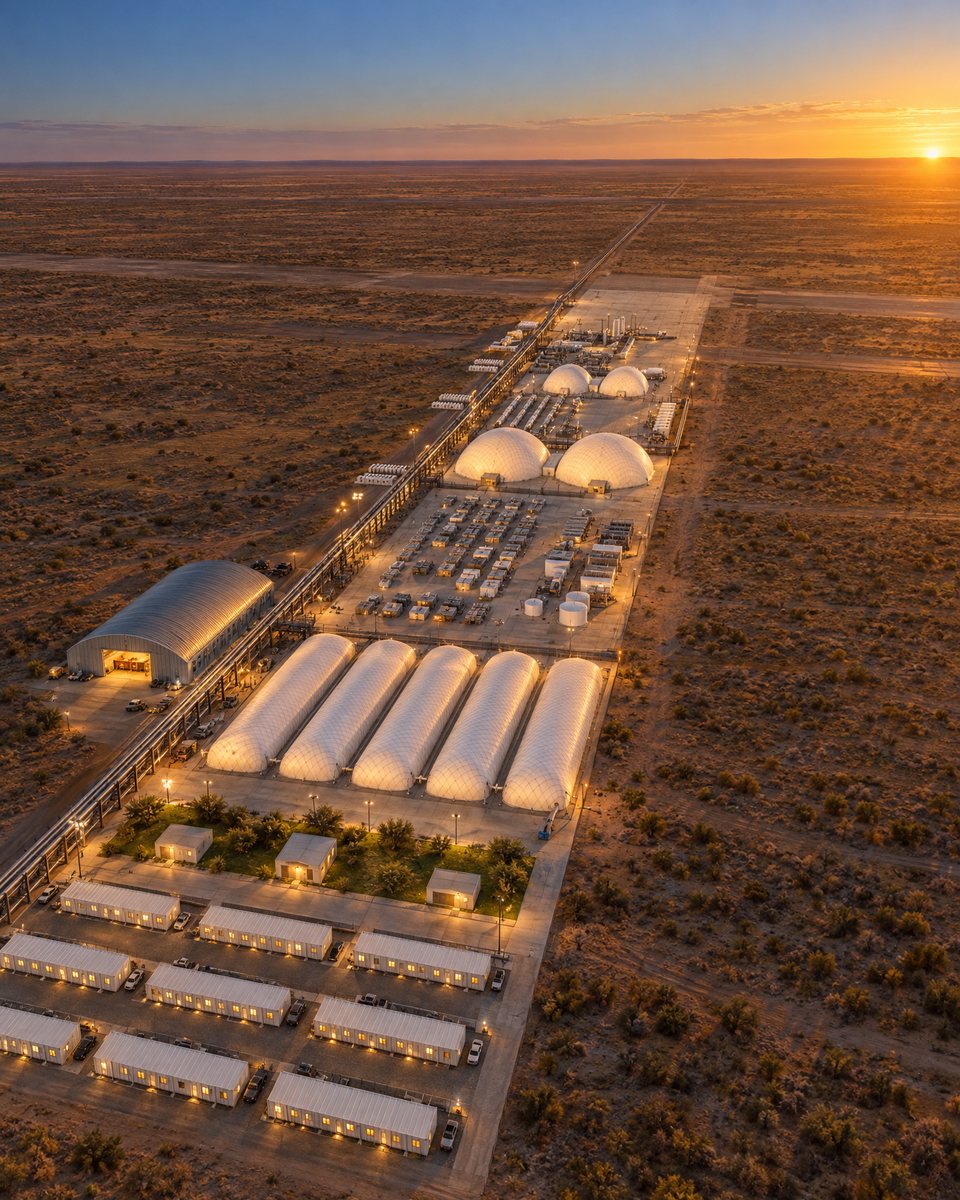
Illustrative aerial render of a planned West Texas campus at sunset: fuel cell units, capture equipment, manufacturing domes and housing
Illustrative image. Not an engineered layout.
Develop · Own · Operate
Principal, not advisory
Fuel cells · Carbon · Compute
Three platforms
USA · MENA
Projects in development
Who we work with
Governments · operators · investors
01 — Thesis

Manufacturing on-site power, and capturing everything it produces

Industry, utilities and data centers need reliable power on site, and the conventional routes to it are constrained. Grid connections take years, and gas turbine production is committed into 2031. Solid oxide fuel cells can be delivered in months and added one unit at a time, but supply is concentrated in very few manufacturers. GHP is developing megawatt-class units and the domestic manufacturing to build them.

A fuel cell converts fuel to electricity electrochemically, without combustion, and produces carbon dioxide, water and heat in fixed proportions. Because our units keep the fuel-side exhaust separate from the air, the carbon dioxide leaves nearly pure, ready for capture and permanent storage. The water and heat are recovered for use on site. We design for all four outputs from the start.

One unit, four outputs
Natural gas or biogas → Power Carbon dioxide Water Heat

Capturing a concentrated stream at the source needs drying and compression rather than chemical separation, so it is far smaller and less costly than removing the same carbon dioxide from the air later.

02 — Platforms

Our platforms

Different sectors, the same physics and the same ownership model: engineer around the constraint, secure the position, hold the asset.

Fuel Cell Manufacturing

USA

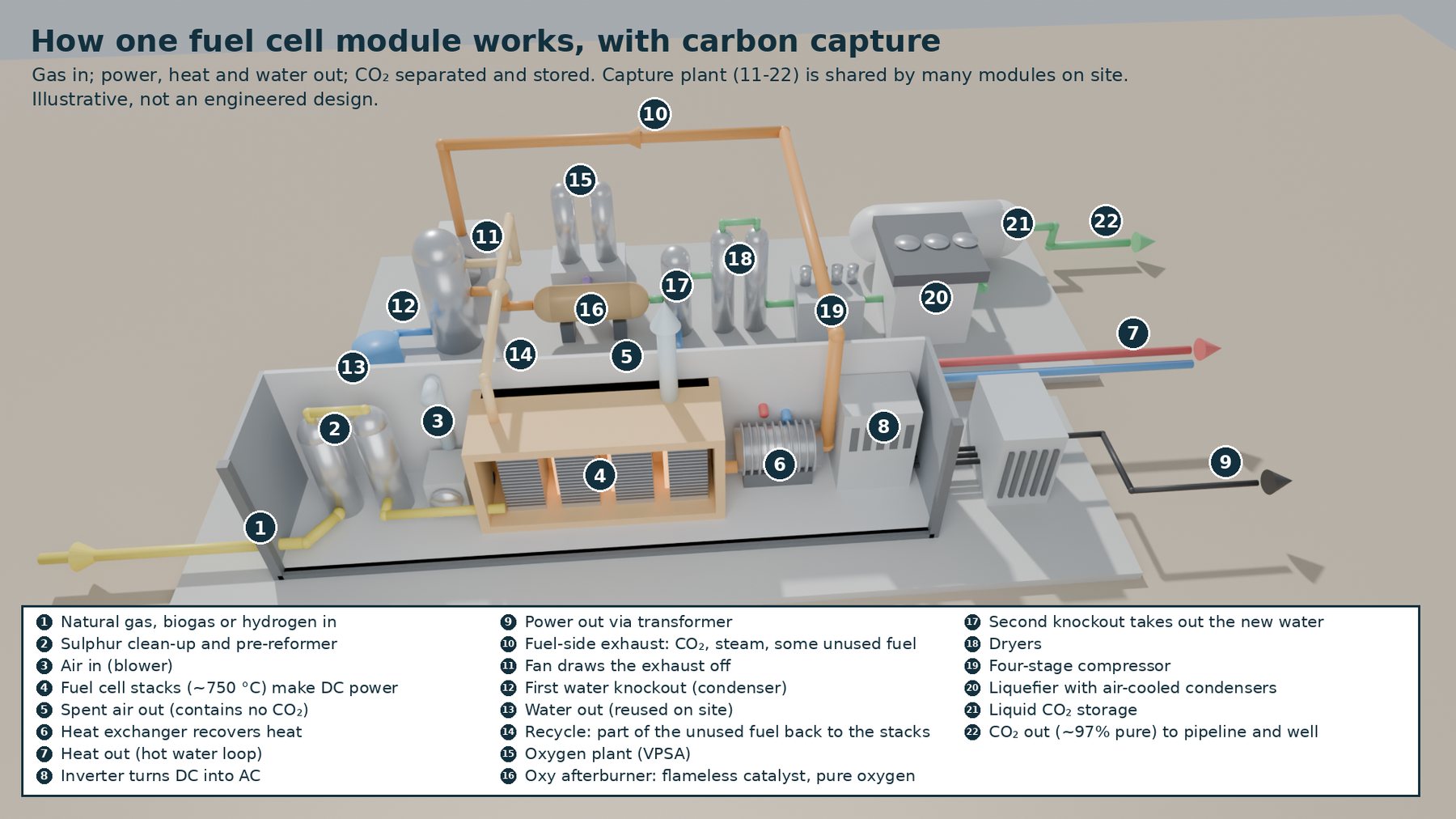
We are developing megawatt-class solid oxide fuel cells for round-the-clock power on site: a 1 MW unit and a 500 kW unit, each built into a 40 ft container and designed to work side by side in any mix. Today's leading solid oxide units are a few hundred kilowatts. Sites now need tens to hundreds of megawatts.

Megawatt-class

One unit does the work of three of today's leading units. Power is added one container at a time, in months rather than years.

Built in the United States

Our first units use proven stacks; everything around them is ours. Licensed stack manufacturing follows, on a US production line.

Capture-ready by design

The fuel-side exhaust is kept apart from the air, so the CO₂ leaves nearly pure, ready to capture instead of diluted in flue gas.

Labelled cutaway of one fuel cell module and its carbon capture train
How one module works, with carbon capture. Illustrative, not an engineered design.
1 MW
Per container
500 kW
For smaller sites and steps
Solid oxide
Electrochemical, no combustion
USA
Domestic manufacturing

Carbon Capture & Permanent Storage

USA

We will capture CO₂ at the source, from our own fuel cells and from other people's operations, and store it permanently deep underground in West Texas.

From our own fuel cells

CO₂ is designed to leave our units about 97% pure, so capturing it will take drying, compression and liquefaction, not a separation plant.

From other people's operations

We will install, own and operate capture equipment at sites that make CO₂: farms and dairies, food plants, wastewater plants and landfills, plus industrial and data-center campuses. Where our fuel cells fit, the site will get power, heat and water too.

Permanent storage, open to other emitters

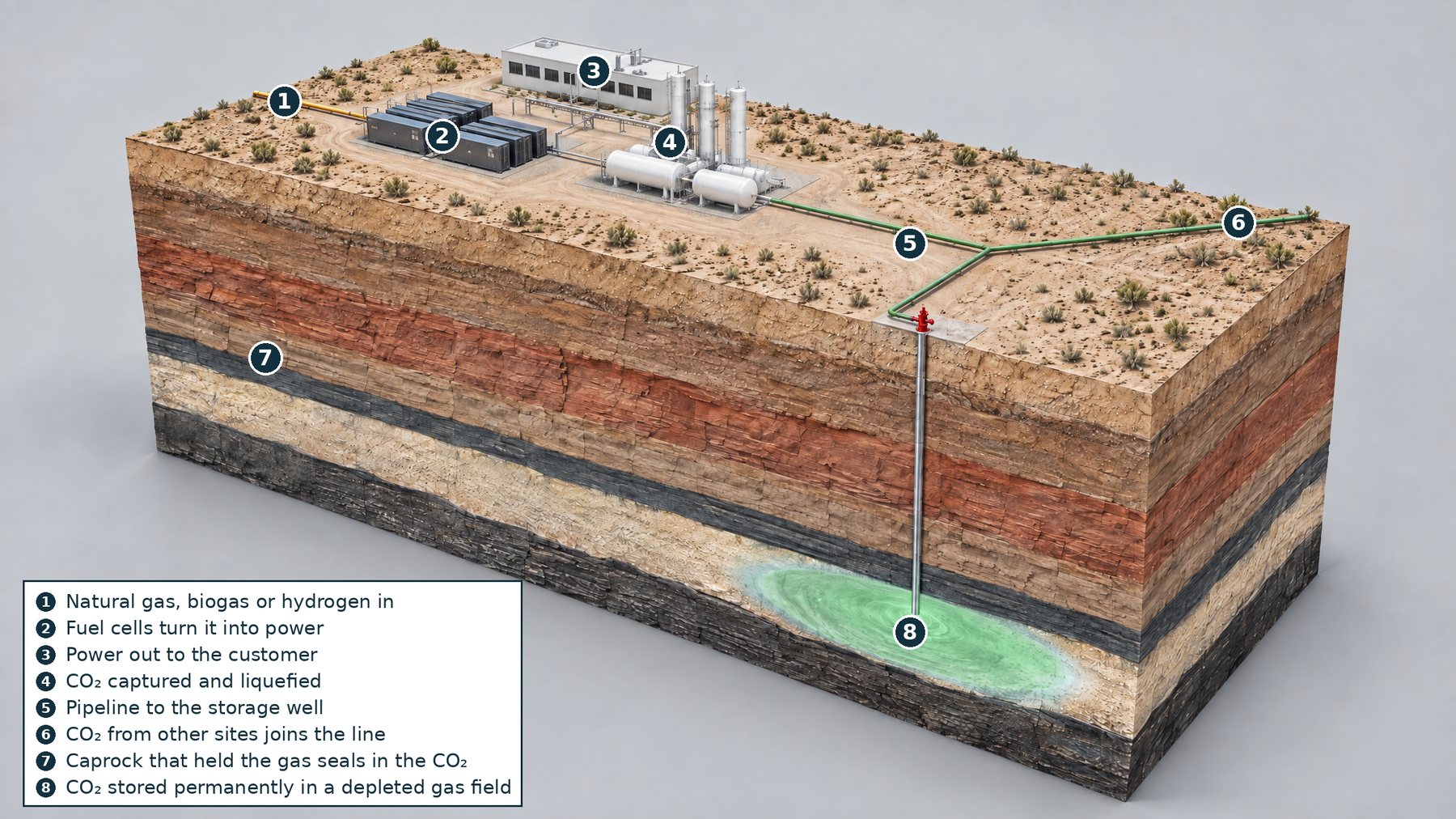
By pipeline, rail or truck to depleted gas reservoirs about 2.5 miles down, under the cap rock that held the gas for millions of years. We are developing our own Class VI storage under the Railroad Commission of Texas, and other emitters will be able to store with us.

Labelled cross-section: fuel cells, carbon dioxide capture and liquefaction, pipeline, and permanent storage in a depleted gas field under its caprock
From capture to permanent storage. Illustrative, not an engineered design.
Point-source
Not direct-air capture
~97% pure
From our own units
Permanent
Geologic storage
Open
To other emitters

Digital Infrastructure

MENA · USA

Off-grid data centers. We develop facilities that generate their own power and produce their own fresh water, operating in climates and markets where the conventional design fails — then partner with governments, operators and investors to build and own them.

Electrochemical generation

Fuel converts directly to electricity through an electrochemical reaction. No combustion, no turbine, no grid connection.

Modular compute

Factory-built and tested before it reaches site. Liquid cooling holds performance regardless of ambient temperature; capacity scales by adding modules, with no redesign.

Water as an output

Fresh water is produced as a direct byproduct of generation. No municipal connection, no desalination, no aquifer draw.

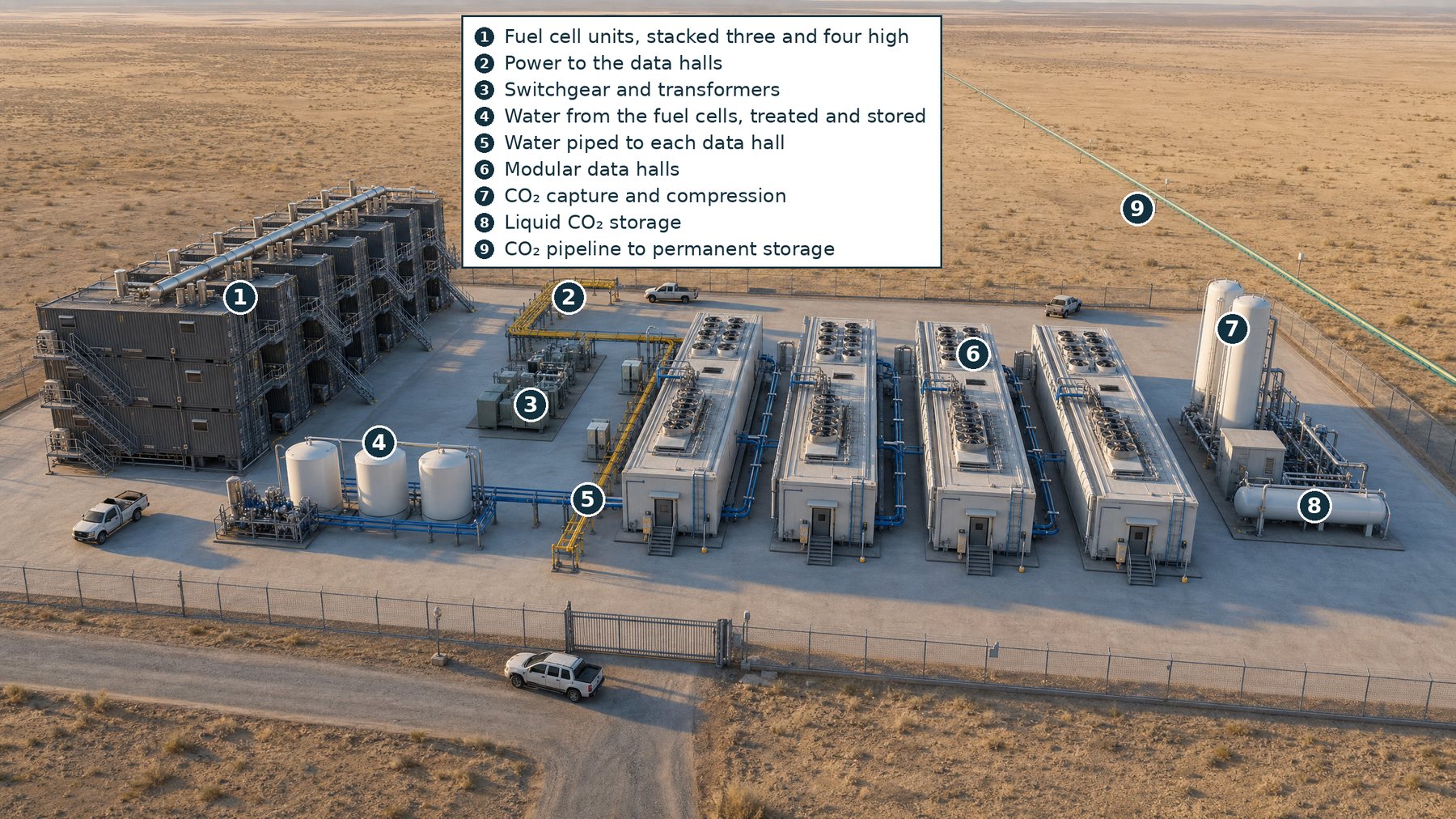
Labelled rendering of an off-grid modular data center: stacked fuel cell units, power and water to four modular data halls, and carbon dioxide capture with a pipeline to permanent storage
An off-grid modular data center with on-site power, water and carbon capture. Illustrative, not an engineered design.
03 — Growth

Where we are growing

Each of our platforms produces inputs for the next. As the core businesses are established, we plan to build further companies on the same sites and the same outputs, each operated as its own business.

Planned

Distributed capture network

Fuel cell and capture units installed, owned and operated at farms, food plants, wastewater plants and landfills across the United States, with the captured carbon dioxide transported to permanent storage.

Planned

Industrial campus

A powered campus in West Texas providing shared power, water, heat, rail access and housing for our manufacturing and processing operations.

Planned

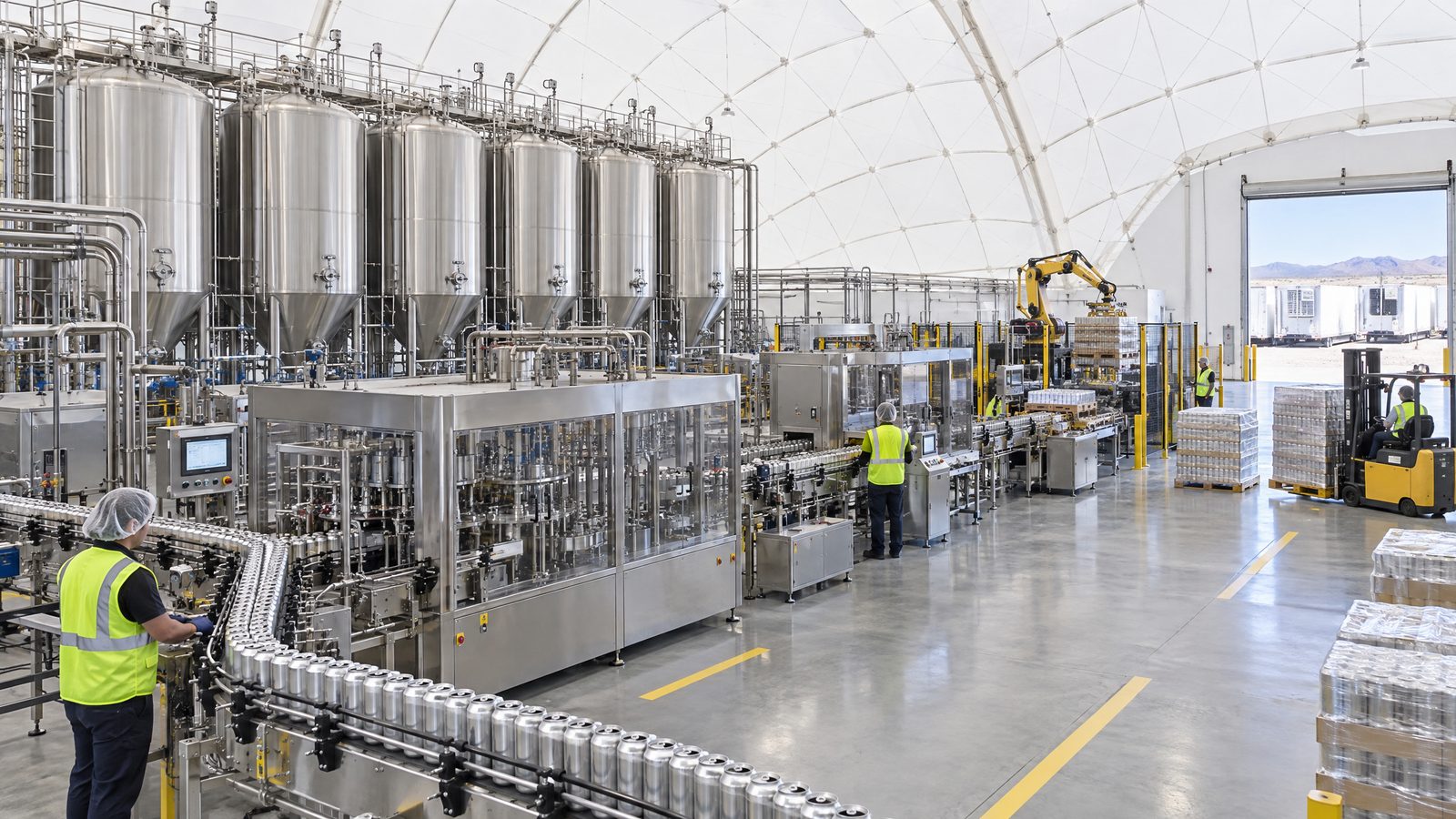
Water and beverage canning

Canning of still and sparkling water and beverages, using water recovered from our fuel cells and carbonation from our own carbon dioxide.

Planned

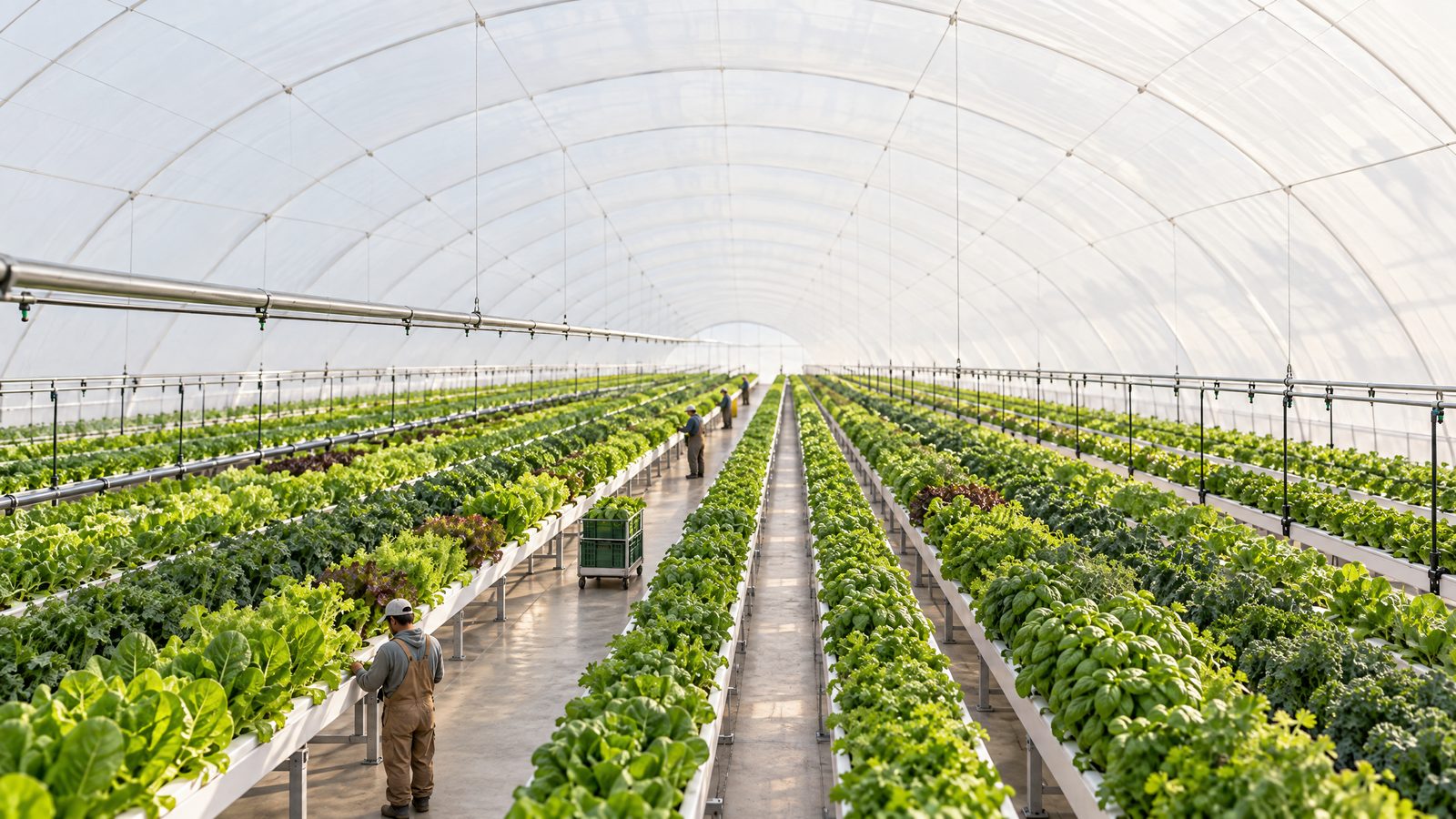
Controlled-environment agriculture

Indoor farming, developed with a partner, using power, water, heat and carbon dioxide from the campus to grow food year-round.

Planned

Aggregates and soil products

Construction aggregate made with captured carbon, and biochar soil products made from agricultural residues at our farm sites.

04 — Renderings

Project renderings

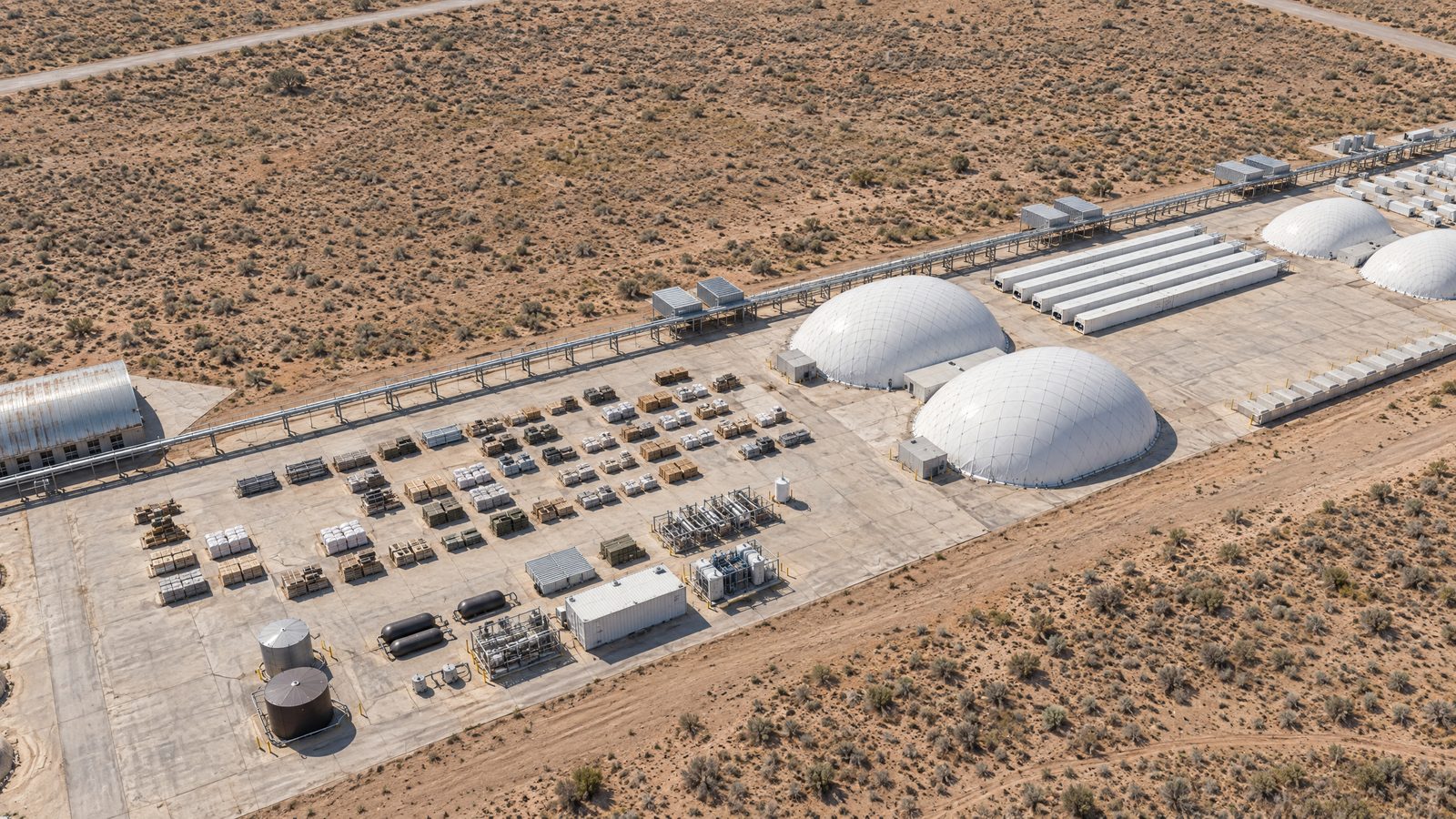
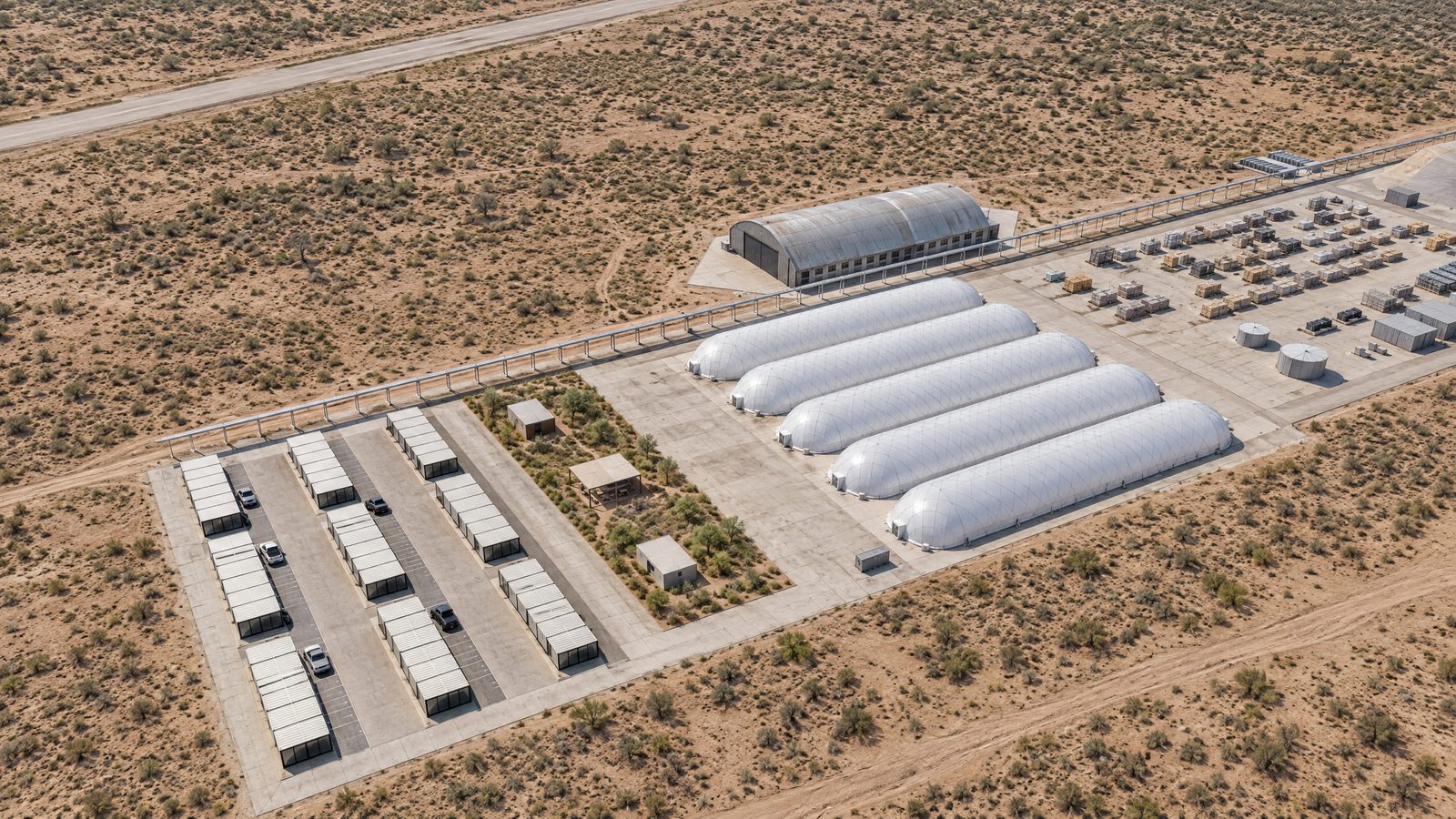
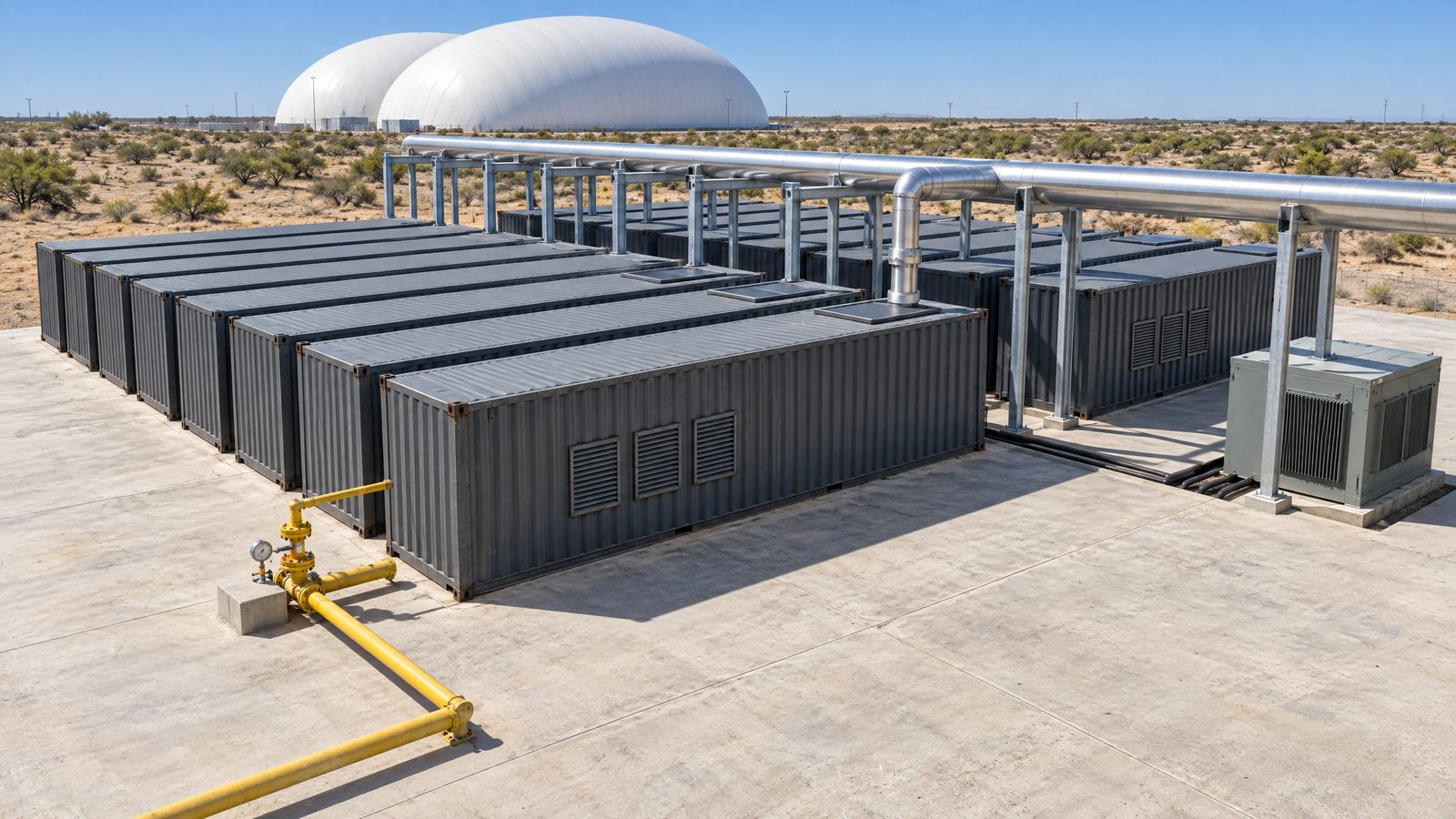
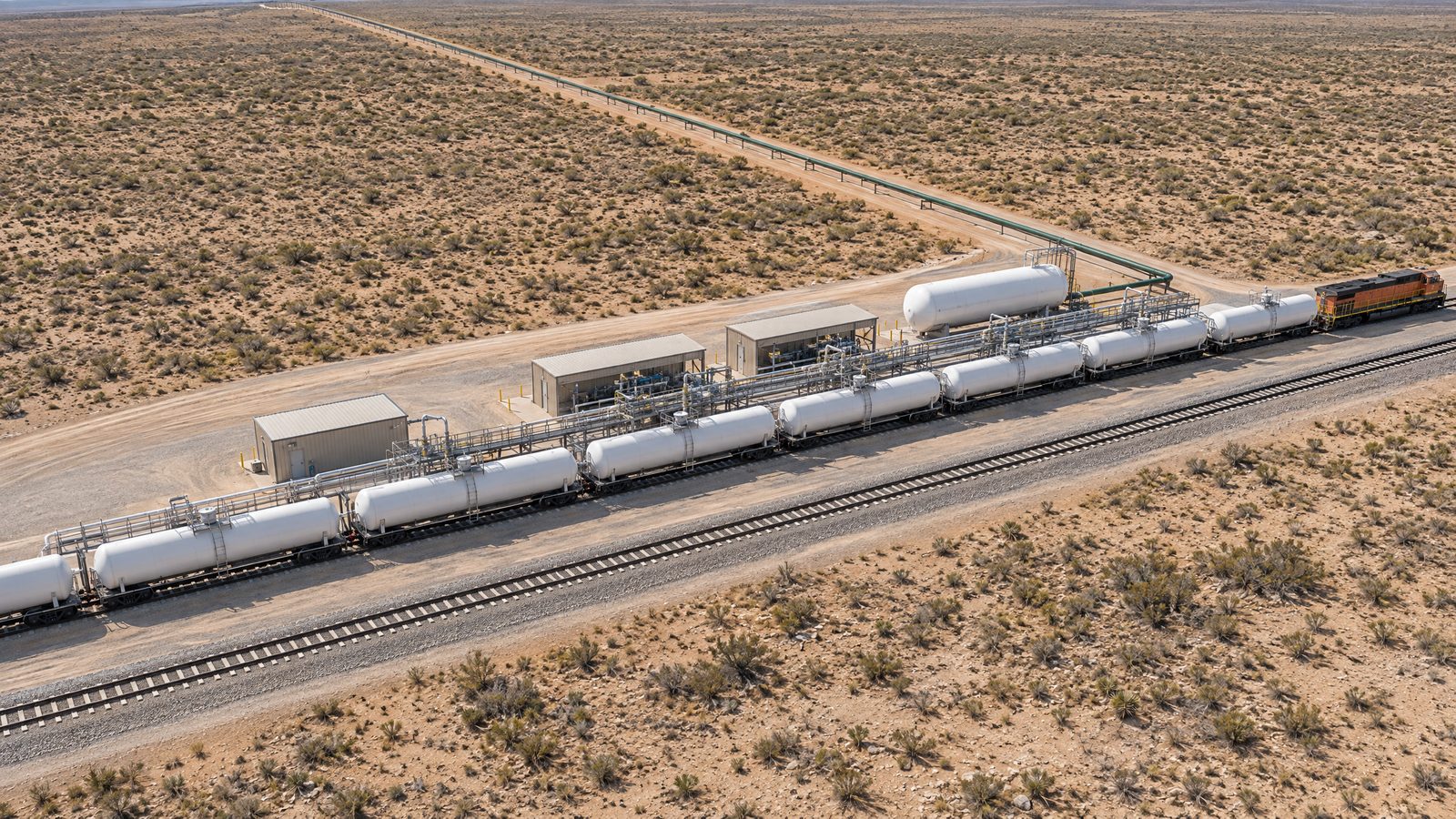
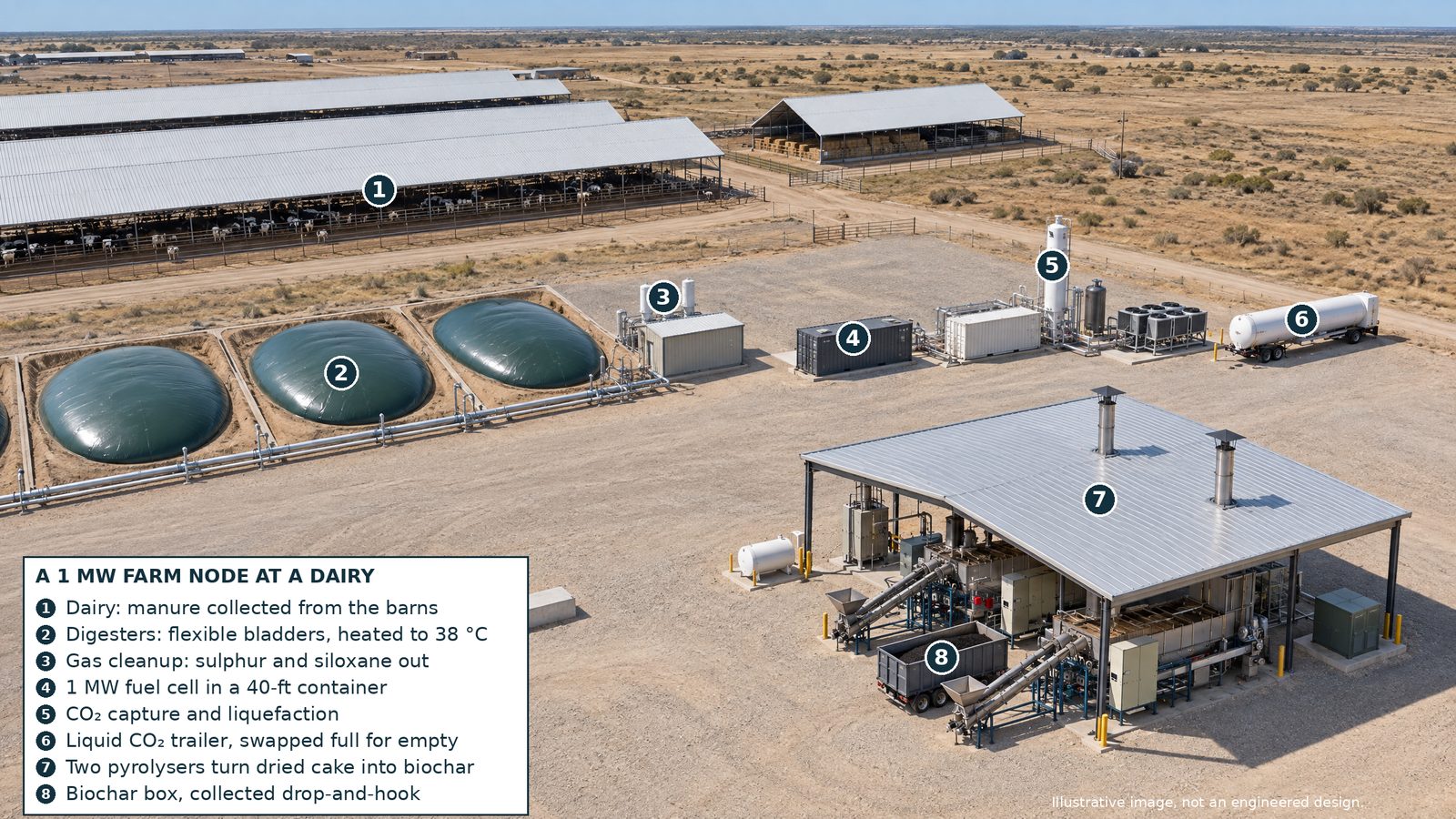
Our planned West Texas campus and a distributed capture unit at a dairy. Illustrative renderings, not engineered designs. Select an image to enlarge it.

The West Texas campus at night
Central plant: fuel cells, capture equipment and production domes
Manufacturing and processing domes
Fuel cell units in 40 ft containers
Railhead for liquid carbon dioxide
A 1 MW fuel cell and capture unit at a dairy
Water and beverage canning
Controlled-environment agriculture
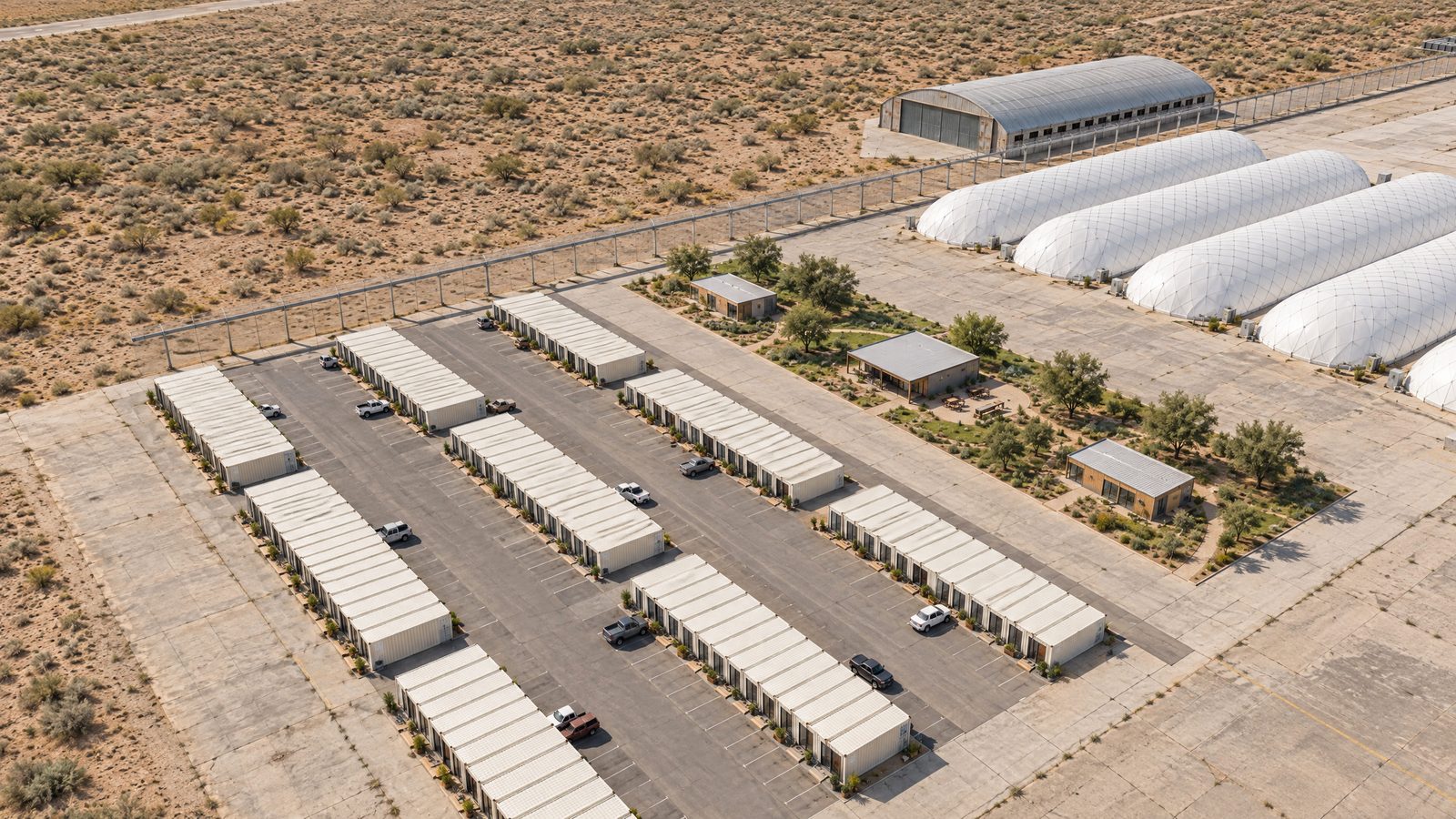
On-site housing
On-site housing
05 — Approach

How we develop projects

Most of what these projects need already exists — the emissions stream, the geology, the rights-of-way, the proven equipment. Very little of it is connected, and almost none of it is owned by the same party. GHP's work is to assemble the position and build the systems that connect it. We source proven components from established suppliers and design, manufacture and own what sits around them.

01

Originate

We form the technical thesis ourselves — the process design, the siting logic, the vendor and technology strategy — rather than intermediating someone else's.

02

Structure

Capital structure, regulatory pathway, offtake and partner architecture, built for assets that are long-horizon and first-of-a-kind. Each project is held in the entity that fits its risk, so nothing contaminates anything else.

03

Own & Operate

We take principal positions alongside our partners. Our economics sit in the operating asset — which is what keeps the engineering honest.

GHP runs on an AI operations layer that carries out financial modeling, regulatory and permitting research, engineering analysis and investor materials for a lean team. The same approach extends to the assets we are developing. Planned capabilities include AI-managed automated production lines, fleet monitoring and predictive maintenance across fuel cell units, automated measurement and reporting for stored carbon, and routing across the capture network.

06 — Stakeholders

Investors, partners and communities

GHP is a principal, not an adviser. We take ownership positions in what we build and stay in them — which means we carry the same exposure as the people who back us and the communities we build in.

Investors

Long-horizon and tax-advantaged capital taking principal exposure to first-of-a-kind infrastructure with policy-supported revenue — on the same side of the table as the founders.

Partners

Operators, technology and equipment providers, landowners and pipeline partners who bring a piece of the asset and share in what it earns.

Communities

Captured emissions, water recovered and reused on site, and skilled construction and permanent jobs — in regions where water access and air permits are live public issues.

07 — The team

Leadership

Matthew Attenborough
Chief Executive Officer (CEO)

An experienced operator across multiple domains, with over thirty years of experience spanning the United States and MENA. He has built and run businesses on both sides of that divide, in markets with very different commercial and regulatory realities. At GHP he sets direction across all platforms and holds responsibility for delivery.

Tracy Evans
Partner · Chairman, Carbon Capture & Storage

Former President and Chief Operating Officer of Denbury, where he led 16 CO₂ enhanced-recovery projects and more than 700 miles of CO₂ pipeline. Founder and CEO of CapturePoint. At GHP he chairs the carbon capture and storage business.

Hadeir Nabawy
Chief Delivery Officer (CDO)

17 years of executive leadership at the sovereign level across infrastructure, strategic partnerships and large-scale commercial execution. Leads market entry, partner relationships and operational execution across all programs.

Brian Garvey
Chief Construction Officer (CCO)

Leads physical build, real estate strategy and project setup from site selection through commissioning. Heads construction and asset development across all programs.

Paul Steven-Jennings
Chief Business Development Officer (CBDO)

A CEO, founder and project delivery specialist with two decades delivering large-scale infrastructure across the Middle East, from data center builds to major colocation and construction projects. Today he leads software and project delivery services for leading government and enterprise clients throughout the region.

Simon Davies
Chief Operating Officer (COO)

A chief executive spanning industrial operations and technology services. As general manager of a UK manufacturing group he ran production, warehousing and sales, and project-managed the construction of its 70,000 sq ft facility. He has led a Doha technology and consulting business for the past decade.

08 — Contact

Contact us

If you are an operator with an emissions or water constraint, a government weighing a project's local benefit, or capital looking for principal exposure to first-of-a-kind infrastructure — we want to hear from you. We are equally interested in technology partners whose equipment belongs in projects like these.

Get in touch →
Matthew Attenborough · Chief Executive Officer
matt@greenfieldhyperscalepartners.com
Hadeir Nabawy · Chief Delivery Officer
hadeir@greenfieldhyperscalepartners.com